Translate

Monday, May 4, 2015

May 2015: Juneau's Spring King Derby

It's that time of year again and we are ready to start fishing here in Alaska.  This weekend marked the beginning of the annual Salmon Derby in Juneau. It's been a long winter but it's time to get out there and go catch some winning king salmon. The spring derby is an annual fund raiser for the regional housing authority, which means this derby is one I can stand by.  All proceeds after derby winnings have been distributed to the derby winners go directly to this non-profit, so you can be sure it's going to a good cause. I will be entering in the second of the two King salmon derbies due to the fact it will be warmer and the fish will be closer to shore in a month or so.  So far I've heard the winning fish right now stands at 23.5 pounds so we have a way to go before we have a standout winner.  I've heard rumor of a 40 pound king being caught yesterday but we won't know until the end of today. If you are interested you can check out the standings HERE.

Spring Fishing:

May marks the beginning of the spring time stream fishing for trout and dolly varden.  You can check out my post from last year about fishing these tasty fish HERE.  This link provides a lot of useful information on catch methods and species of fish that can be caught during the spring in Alaska.

Permits and Fishing Regulations Update 2015:

Licenses and Permits:

Description Price
Sport Fishing License $24.00
Hunting License $25.00
Sport Fish & Hunt License $48.00
Sport Fish, Hunt, & Trap License $62.00
Hunt & Trap License $39.00
Trapping License $15.00
Low Income Sport Fish, Hunt, & Trap License $5.00

Sport fishing regulation changes:

Alaskan Resident


  • The resident bag and possession limit is three king salmon 28 inches or greater in length.

    Nonresident
  •  
  • The nonresident bag and possession limit is one  king salmon 28 inches or greater in length, except during May and June the bag and possession limit is two king salmon 28 inches or greater in length;
  • The nonresident annual limit is six king salmon 28 inches or greater in length.

  • Rockfish Conservation

    Vimeo Video on Rockfish Conservation: HERE

    There have been many changes over the past few years in Southeast Alaska regarding fishery conservation and we are beginning to feel the effects.  Shrimping has been closed for personal and sport use for the past two seasons and there are now more strict regulations for Rockfish catch and release.  A bit of good news though, the fishing license and hunting licenses have not gone up since 2013.  Out of state sport licenses have seen a rise however it is still well worth the money if you plan on going out on a boat this summer.

    2015 Long Range Weather:

    The least interesting but most exciting news so far this spring: IT'S GOING TO BE WARM THIS SUMMER!  I know, everyone thinks Alaska is home to the frigid cold year round and we don't ever have sunlight, but most of Alaska often times has a hot, dry, enjoyable summer.  Last year was an exception as we clocked in 2 of the 3 wettest months on record from June-September.  This year however is supposed to be different. The long range forecast from NOAA for May-July gives us a +5 to +10 degree temperatures as well as dryer than normal conditions, all which can be good and bad for fishing.  Since it will still be early on in the summer when we see this weather the water levels, from the runoff of the alpine, will be relatively normal.  The warm temperature will make for more enjoyable fishing but remember to bring your sunscreen, Alaska sees a lot of sun during these next three months.  Here are the long range forecast charts for the next three months:


    And as always, thank you for reading and please like and subscribe!

    Thursday, July 10, 2014

    Summer Fishing Part 1

    Summer Fishing

    It has been a slow start to the 2014 fishing season.  Last week marked our first fishing trip out on the boat and I have some new stories to tell.  We went out on June 27th, and the skies were clear, water calm, or so we thought.  we hit some pretty large wind swept waves as soon as we left the harbor. The days crew consisted of: Brian, Eli, Jenny, and Doug.  All the gear was packed up and ready to go by the time we got the boat in the water.  It was around 10:30 by the time we left harbor and headed out to the south side of Shelter Island for some halibut fishing.  

    Halibut Fishing

    Halibut fishing is pretty straight forward.  You drop a weight with 2 hooks about 1-2 feet apart with bait on them and let it sink to the bottom.  We usually like to fish in the 250-280 foot depth as you can get some rather large Halibut but not so large that you can't eat them.  This picture is facing west toward the Chilkat mountain range and the island in the foreground is Shelter Island.  We chose this spot first because it was out of the wind and was relatively flat calm. We caught 2 small sized halibut before we pulled anchor and moved to another spot.

    Salmon Fishing

    The time of year to catch summer kings is here, so we decided to drop a troll line and see if we caught anything.  We did not :(


    Secret Spot

    We got to our secret spot and dropped anchor and began dropping the lines.  Here is Brian dropping a halibut line with some bait on a down rigger.  It only took about 10 minutes before we had our first fish on the line.  The only thing exciting about pulling a halibut up from 300 feet of water is when you see the poll jerk downward and you know you have a fish on the line.  Otherwise it is a lot of hard work and persistence you will find that they like to dive back down and become dead weight.  However with a bit of persistence you can tire them out and have yourself a nice fish on the deck.  The largest halibut we caught that day was around 30 pounds which is fairly small but the amount of edible meat on them is pretty decent so everyone that went fishing that day went home with about 10 pounds of fish each.

    The Catch:
    Fishing was great that last Friday of June and we look forward to many more sunny days on the water this summer in Southeast Alaska.


    And as always, thank you for reading and please like and subscribe!

    Tuesday, April 1, 2014

    Fishing Recap 2013


    Juneau May 1-31st
    Last year was a very fruitful year for fishing in Alaska. We had an early king salmon run as well as a strong dolly varden run.  The limit for any given day was around 12 dolly and 3 kings.  During my first real week out on breaks and lunch I caught 6 dolly and saw only a few kings being pulled from around the fishing area.  
    Dolly varden

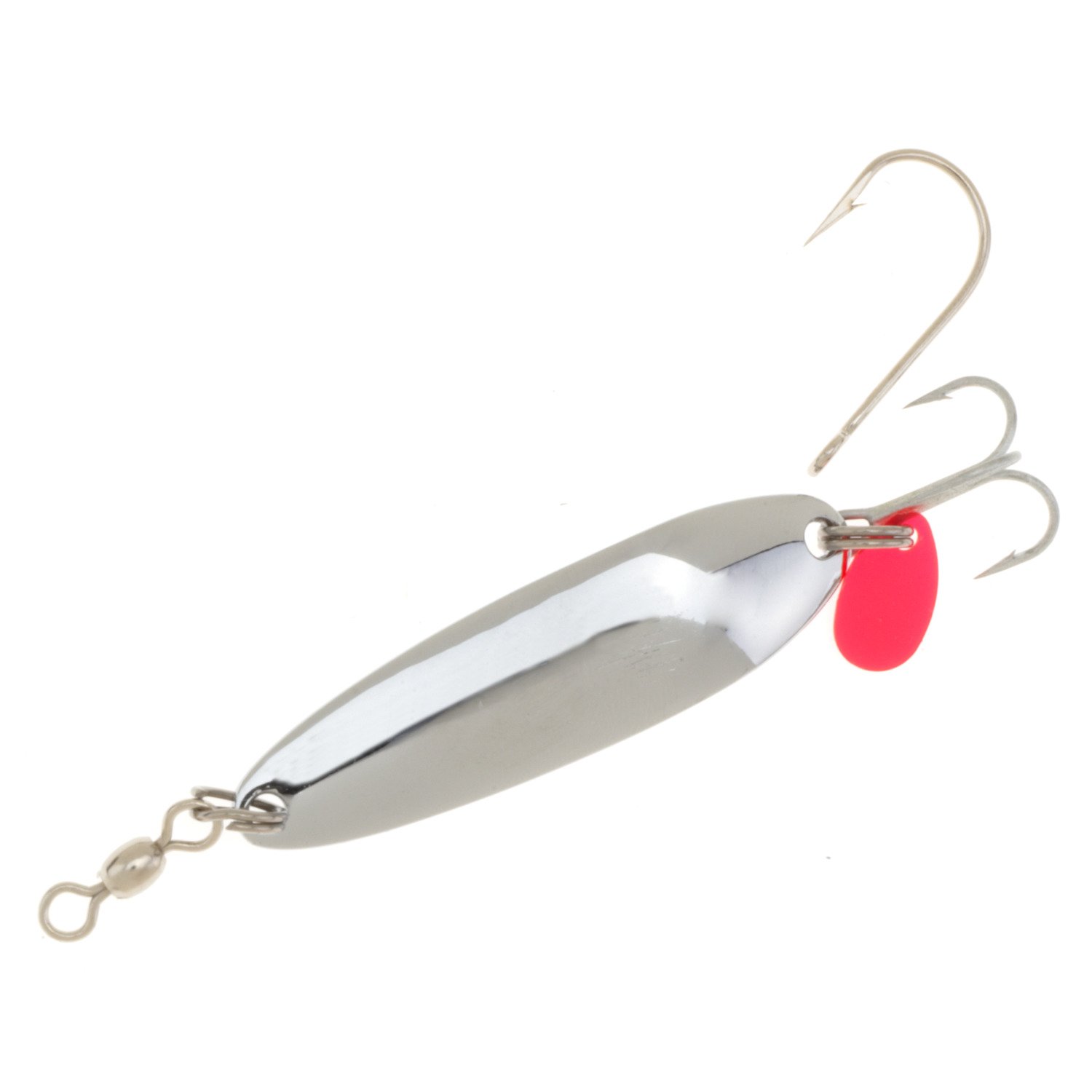
    Using a spoon lure as pictured below, the red dangle next to the hook really appeals to the dolly.  I highly recommend using a Krocodile no bigger than a 1/2oz lure and a fishing ling that is strong but light, such as a 5lb test line.  You may use up to a 10lb test but I would not recommend it for dolly fishing as you will most likely be using a large trout rod.  The reel size really depends on how fast you want to bring in your lure.  Last year I was using a Shakespeare Crusader which you can find on my previous post.


    Krocadile Luhr Jensen


    Fresh Water Fishing: May-July

    Although dolly can be caught in streams and lakes, it is not often that you can easily get to them, as they like to go into cracks and crevasses where the salmon go to lay their eggs.  Trout on the other hand are more readily available.   In Southeast Alaska, you can catch the following trout: Steelhead/Rainbow, Cutthroat, and Lake Trout.  Rainbow are most likely the most common trout available but Lake Trout tend to be the largest.

    Juneau

    Cowee Creek (June-July)

    Pink Salmon (July)
    Coho salmon (August)
    Cowee creek is a very interesting place to fish.  There are a few species that run through there in the early summer.  You can catch anything from a dolly varden to coho salmon.  On many of our trips out there Brian and I would limit out on our pink salmon catch in roughly an hour.  The dolly varden are a lot harder to spot and don't bite as aggressively as the pinks.  The larger salmon in this picture are all male and have a leaner meat with less taste.  The smaller fish on the right side of the picture are all female.  These are the ones you really want to catch if you are looking for some decent early season steaks and fillets.  They are not the most coveted salmon in Southeast Alaska but man are they tasty.  The pink salmon run is from early June to mid July and the runs really depend on the location.  
         My favorite early season fish though has to be the dolly varden.  If you are lucky enough to catch some of these their meat is tender, juicy, and full of flavor.  My favorite recipe for this fish has to be a basic blackened seasoning with a flour, egg, salt, and pepper batter.  They don't take long to cook so be careful not to overcook them.  The size of the dolly varies greatly and you can catch anything from a few pounds to well over six or seven pounds.  Below is a prime example of a female (top) and a male (bottom).  They can also vary widely in coloration.  The ones in Southeast Alaska are mainly a greenish silver color with spots.  If you manage to catch one on a small setup they are a lot of fun to reel in.  Be careful though as they like to run to hiding places which can get your line stuck under some nasty logs or rocks.

    North Douglas (June-September)

    North Douglas in Juneau, Alaska has to be one of my favorite places to go bank fishing.  It is wide open with lots of shoreline.  You can basically catch all of the species of salmon that run through the area and most of them will be fresh and not spawned out.  The false outer point location is an excellent spot to get an early season king but be careful as there are a lots of locals that like to sit out there all day and they are not the friendliest of people.  If you go out to false outer point make sure it is at low tide as there are lots of rocks to get your gear caught on.  Intermediate and high tides are probably the worst times to go out there.  Fish Creek, which is also located on North Douglas, is a great spot to fish King Salmon in this small lagoon which is just off of the main river, but this location is also heavily fished so it is best to go very early in the morning or just before dusk.  Later in the season around August you can sometimes find people fly fishing the river for Coho Salmon.  

    Catch of the day


    Harvey Family Fishing!

    Monday, October 7, 2013

    Winter Activities

    Upcoming posts:

    This winter I have been invited to be a featured contributor on Dinner's With Dan where Brian and I will be taking our knowledge of seafood and giving everyone a taste of Alaskan cooking.  We will be regularly featured on every first and third Thursday of each month.  I look forward to showing everyone how Alaskans eat and prepare their seafood.  

    Our recipe from last week was a panko breaded black cod recipe with baked potato pieces and sauteed asparagus.  If you would like the recipe you can visit Dan's website which is located at the top of my blog under Dinner's With Dan.  Cooking is my second passion next to fishing and sharing some of my delicious recipes is a privilege.  This winter will be much more enjoyable as I will be able to continue blogging and I am very excited for fishing next year. I am going to try and update this blog on a regular basis and include more detailed descriptions of the adventures had in the Alaskan wilderness.  If anyone has any recipes they recommend feel free to send me an email with it and I will try to work it into our planned courses we will be making throughout the winter.

    Thank you for following my blog this summer.    If you have any questions from now until next spring feel free to send me an email @ fskane67@gmail.com.  And as always, thank you for reading and if you like this blog please subscribe.

    Saturday, September 14, 2013

    End of the Season

    This is the end...


    Well, fishing season has come and gone and it was a good year not only for me but for the entire state of Alaska.  This year we had a record catch of 268 million salmon.  That is a lot of fish and that is just counting the commercial fisheries.  We also have to take into consideration all of those sport fisherman out there so it is probably more around 300 million considering we have a population of just over 700 thousand and a strong tourism season from May-September.  So a little recap of this year.  We caught...


    Dolly Varden


    Chum Salmon


    Pink Salmon


    Coho Salmon


    Dog Salmon[left], Coho Salmon[right]


    Halibut


    It was a good year of fishing.

    Thank you for following my blog this summer.  I look forward to doing it again next year.  If you have any questions from now until next spring feel free to send me an email @ fskane67@gmail.com.  And as always, thank you for reading and if you like this blog please subscribe.

    Wednesday, August 28, 2013

    The Coho Run!

    Cowee Creek and The Coho Salmon Run


    There have been a few reports of a large run of coho salmon in a remote part of Juneau.  I will be making a trip out and documenting the entire experience.  My goal is to catch at least a dozen of these delicious species by the end of the month.  I will not be revealing an exact location but this creek has about 2 miles of fish able shoreline.  There is only about a month of fishing left in the 2013 fishing season but we are going to make the most of it.  I have been keeping a running total and here are the numbers to date:

    Chum Salmon:


    : 40 salmon for a total of 250 pounds.


    King Salmon:


    : 4 salmon for a total of 90 pounds.


    Pink Salmon:


    : 20 salmon for a total of 120 pounds.


    Coho Salmon:


    : 4 salmon for a total of 67 pounds.


    -As always, thank you for reading 
    and if you enjoy this blog please subscribe.

    Tuesday, August 13, 2013

    Cowee Creek

    Kowee Creek

    First Coho of the year!

    Location


    My first coho of the year came from not open water fishing but stream fishing all the way out the road at a little place called Cowee Creek.  It's about 40 miles away from town but has the most amazing fishing from July to September.  This creek has a great pink salmon run from mid July through the next week or two(mid/late August.)  The only thing to watch out for are the Grizzly Bears.  You may find yourself fishing in the most pristine creek bed and suddenly be sharing your personal space with a large mother and maybe one or two cubs.  The width of this creek at its widest location is approximately 15-25 feet and runs at about 2-3 feet with some really good pockets for fish that run at about 5 feet.

     Setup

    Krocadile Luhr Jensen

    All of my fish were caught on a 1/2 oz krocadile DIE #3 Luhr Jensen which has that orange bobble that resembles an egg only its a flat piece of plastic so it's legal for pre-bait fishing. The reel I was using was the Shakespeare Crusader from 2012 which has done very well for the past year and is very low maintenance.  The rod I chose for this trip was the Daiwa D-Shock and the reason why I chose such a small lightweight pole was for its feeling.  Due to the fact that coho salmon bite very gingerly in streams you need something with a lot of feel and reaction.  You definitely need to be able to tell when to set the hook.  This entire setup probably ran me around 50 dollars and can be found at your local sporting goods store or at Western Auto here in Juneau.
    Daiwa D-Shock
    Shakespeare Crusader


    Identification and catch method 


     This is the only fish I ended up keeping for the day as all of the other pink salmon were no longer edible.  This small male coho provided 2 14 oz steaks and was promptly put on ice.  As you can see from the lower picture the belly and sides were still very bright.  The back and top fins of the coho were a dark green color and the only real way to tell them apart from a female pink salmon is the coloration and spots on the caudal fin.  The mouth may be deceptive and be misshapen like that of a pink salmon but as long as there are spots on the rear fin and is bright on the belly and sides you should be able to tell the difference.  I would recommend a larger setup for fishing out in the open water or bank fishing on the beach as you can often times pick up silvers and kings that weigh a lot more than what my 12 pound test can handle.  Stream fishing is more of an art and takes more finesse.  You must be careful about setting the hook and not jerking the line back while you are fighting the fish due to the fact that the stream is also fighting against your line.  Often times the fish will run up stream so as long as you let the fish run towards the bank you are standing on you should be in a good position to reel in the fish quickly.


    Cleaning and food preparation


    In the photo to the right I am preparing the fish first by bleeding it from the gills.  (If you are not new to fishing you can disregard this last section as you already know how to clean and prepare a fish for food.)  After the fish has been properly bled out you can start by cutting the belly from underneath the pectoral fins to the anus.  Don't be afraid to cut too deep as you will only puncture internal organs that can be cleaned after you have gutted the fish.  After you have made your first cut you can begin scooping out the innards.  If it is a female there will be two rows of roe towards the bottom of the belly forward of the anus.  You may choose to keep these as they are good for bait and/or pickling.  Once all the innards have been removed you will want to scrape the blood line below the spine.  This will keep the meat fresh and tender.    Always use as little water as possible as it tends to firm up the meat. When cutting a filet from a fish I find it easiest to start from the head and work towards the tail.  Make your first cut just below the gills and cut straight down until you are almost at the spine.  Once you have done this make a turn in your cut and run the blade, which should be a very sharp filet knife, and run it straight along the spine.  Get the blade as close to the rib cage, which you can see by looking under the filet on the inside, and continue all the way down to the tail.  It is best to keep the meat cool after you have prepared it so having some Ziploc bags and ice will keep your fish fresh and cool.


    -As always, thank you for reading 
    and if you enjoy this blog please subscribe.